For cinematographer Ashley Barron ACS (Rivals, Dangerous Liaisons, Disney’s Doctor Who), setting the look of Netflix’s How to Get to Heaven from Belfast went way beyond simply lighting a show; it meant engineering a vivid sense of unease. The series, a vibrant absurdist comedy-mystery about three former girlhood friends reunited by the death of a schoolmate, is awash with visual juxtapositions. The funny, sinister, garish, and somber frequently share the same frame with lighting playing an essential part in telling the story. To create the weird world of How to Get to Heaven from Belfast, Barron strategically utilized Astera Titan Tubes and LunaBulbs, designing a macrocosm where pockets of saturated color bloom against shadow.
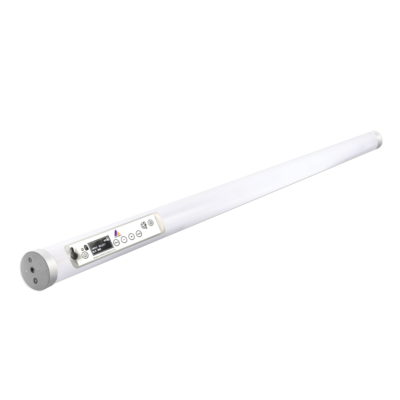
Barron, preparing to shoot the first three episodes, worked closely with director Michael Lennox to establish the visual template of the series. From her work on Dangerous Liaisons, Barron had developed a coveted technique that encouraged long sweeping takes and dynamic movement through location spaces. Planning to adapt this kinetic style to How to Get to Heaven, the cinematographer orchestrated a 360-degree lighting approach that creatively made use of the versatile Astera Titan Tubes. She describes, “I needed something that was nimble, full spectrum, remote-controlled, and lightweight. We wanted a lot of flexibility with color and movement.”
Into Knockdara Grand Hotel
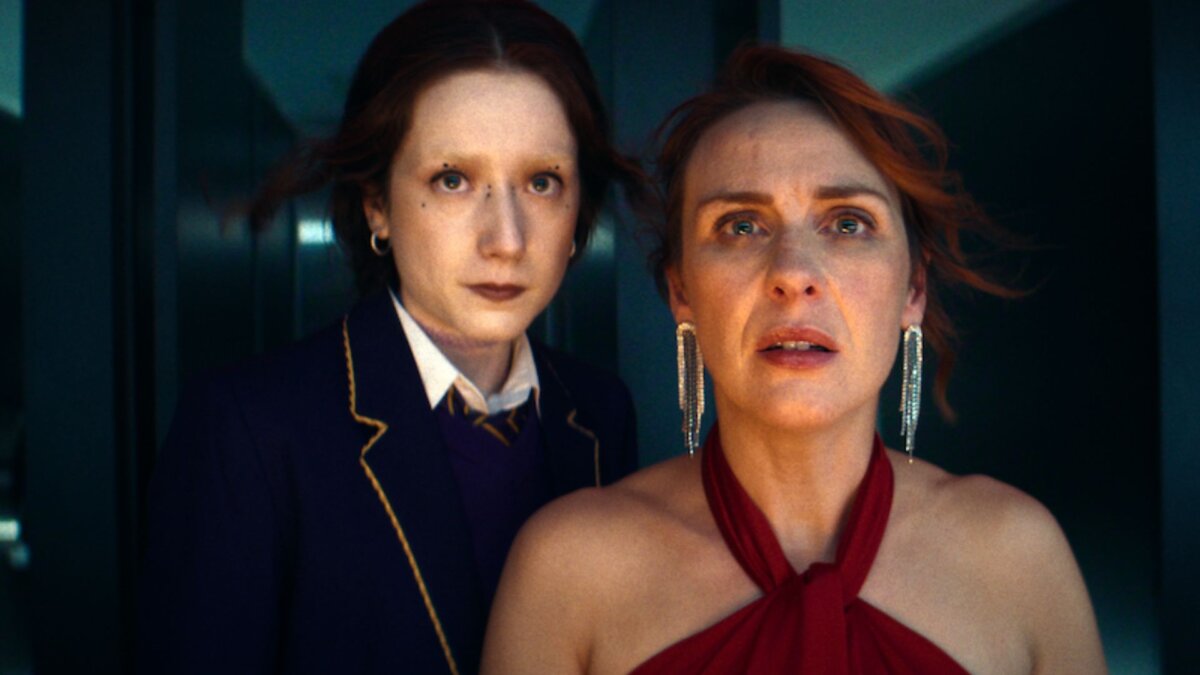
The grim tidings of Greta’s (Natasha O’Keeffe) death bring Saoirse (Roisin Gallagher), Dara (Caoilfhionn Dunn), and Robyn (Sinéad Keenan) back to Knockdara, a fictional Donegal town where their buried secrets are waiting. They check into the only inn, the Grand Hotel, a recurring set that offers the first peek into the show’s sordid ‘true colors’ and where the look really takes off. Past a hotel manager sporting an LED bowtie, to enter the Knockdara Grand is to step inside a warren of archways, colored glass windows, and haze-filled rooms painted in slashes of light.
“Tonally, the shift really starts during the sequence where they each take a shower,” describes Barron. “That was the first time that we started to seriously incorporate colors in a way that realistically wouldn’t exist in an Irish hotel.” Color bleeds through—a blue up-light accenting the ceiling makes Dara pop; a red lampshade and neon sign bathe Robyn’s bedroom closeup in red, while the shower in each room glows purple. One scene later the three women meet in the dining room, where blue windows paired with pink and yellow lamps create an off-kilter ambiance, emphasizing things are not as they seem.
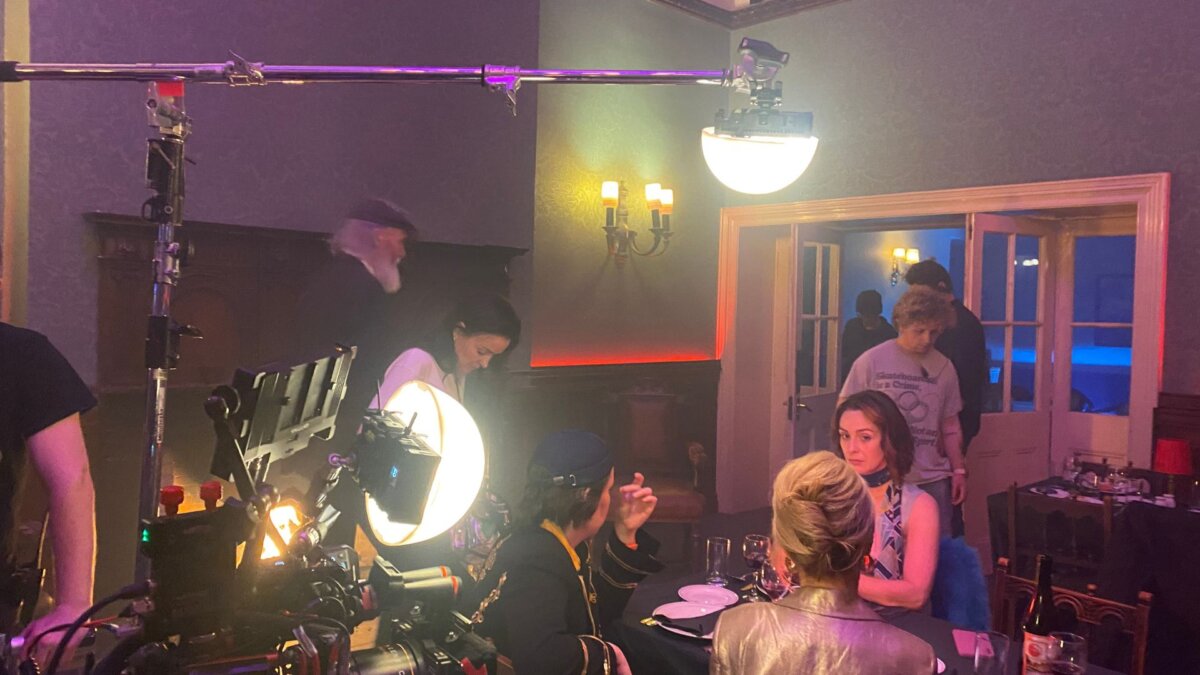
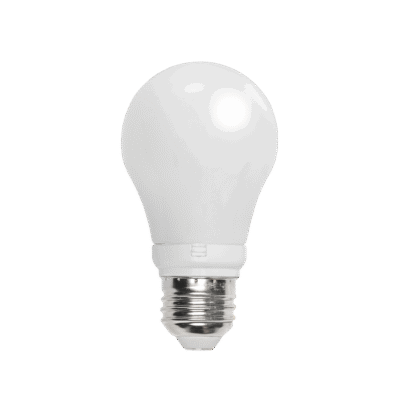
While planning that Knockdara Grand restaurant scene, production designer Tom Conroy sent Barron an image with a red neon outline running the perimeter of the room. “Is this too weird?” he asked. It was exactly weird enough. Barron seeded the set with blue and red Astera Titan Tubes—built on Astera’s Titan LED Engine for precise, flicker-free color rendering—while cultivating pockets of darkness that do as much work as the light itself. “If you’re just dealing with pockets of light and color, you let the darkness take care of the rest,” she explains. This color-in-darkness approach shaped how the hotel’s practical lamps were treated. Astera LunaBulbs were fitted inside lampshades on dinner tables, side tables, and wall sconces, allowing full and granular color control on the fly for every fixture in shot. “If I had set a light purple, but then the director showed up and wanted orange instead, we were able to immediately change the hue,” she says. “That control was integral; it allowed us to be responsive to the moment.” Shooting in the hotel was a perpetual dance of camera movement and fast-paced blocking, with Saoirse, Dara, and Robyn constantly either getting into something they shouldn’t or frequently fleeing from that very something. Barron and gaffer Adam Slater orchestrated the lighting in real time as the camera moved through narrow archways on a Ronin gimbal. “My poor gaffer [Slater] was also my board op,” Barron explains. “He kept right next to the camera working off an iPad.” The remote controllability of the Astera LEDs along with their ability to neatly tuck into the nooks of any locale was imperative.
Cabin in the Woods
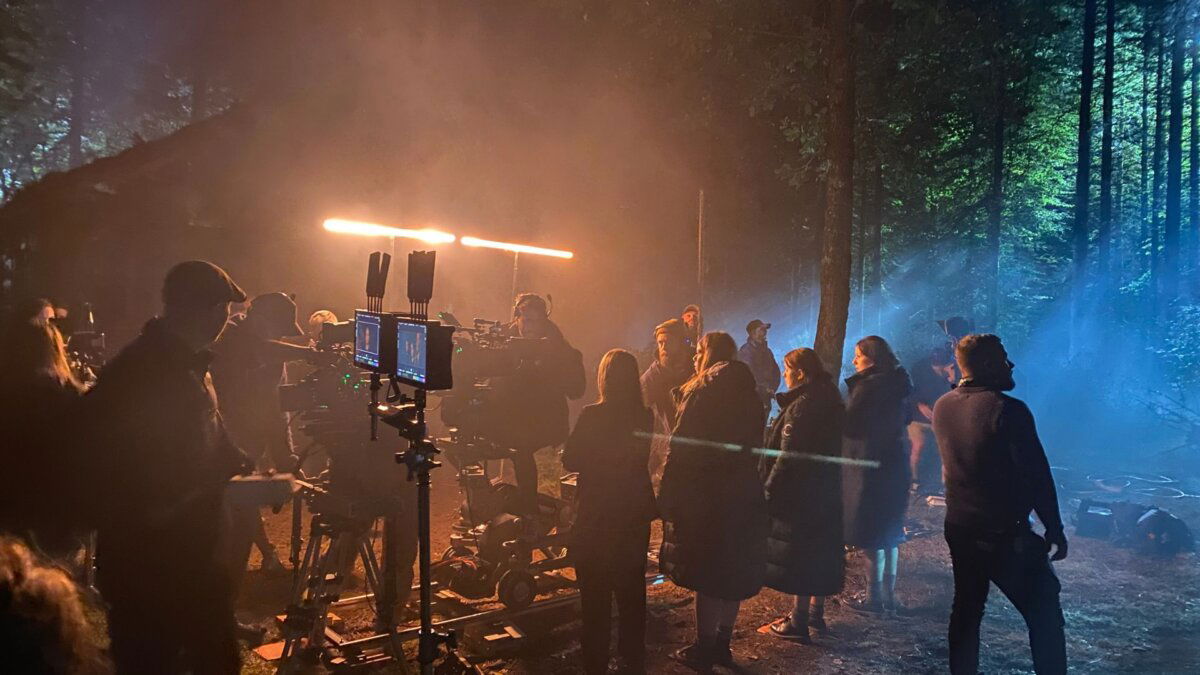
The gang’s big secret is tied to an incident from their schoolgirl years at a neglected cabin in the woods—a location that becomes one of the show’s central images, first introduced to audiences as a burning carapace. Custom-built by the production design team on location in real Northern Irish woodland, the cabin was designed so that opening the door would reveal actual forest beyond. “I wanted that depth, so it doesn’t just go to black,” Barron explains. “It’s meant to create a ‘Hansel and Gretel,’ eerie, storybook feel—as if there is something lurking behind you.”
The cabin recurs throughout the series, and Barron’s original lighting plot had to be inherited cleanly by the DPs of subsequent blocks. Astera Titan Tubes, clipped to the cabin’s exposed wooden beams with DoPchoice SnapBags provided flexibly focused light. This setup’s maneuverability and control repeatedly proved their merit, especially during a nine-page conversation scene in the second block. The beam-mounted Asteras, pre-programmed and ready to shift between presets, allowed such a long scene to be covered without totally re-lighting. “Because we designed it to have these beams and clip-on Titan Tubes with SnapBags, you can move quickly just by programming your lighting setups,” Barron says.
And then there’s the cabin fire—the image burned into viewers’ memories before they even know what it signifies. Achieving the sequence required a combination of on-location shooting and bluescreen work, with practical fire supplemented by Titan Tubes, a combination of static lighting with fire-flicker effect, to light actors’ faces. “Picture a Titan Tube on a C-stand,” Barron says, “directly positioned in front of the actors to light the faces of the group.”
Lighting to Motivate
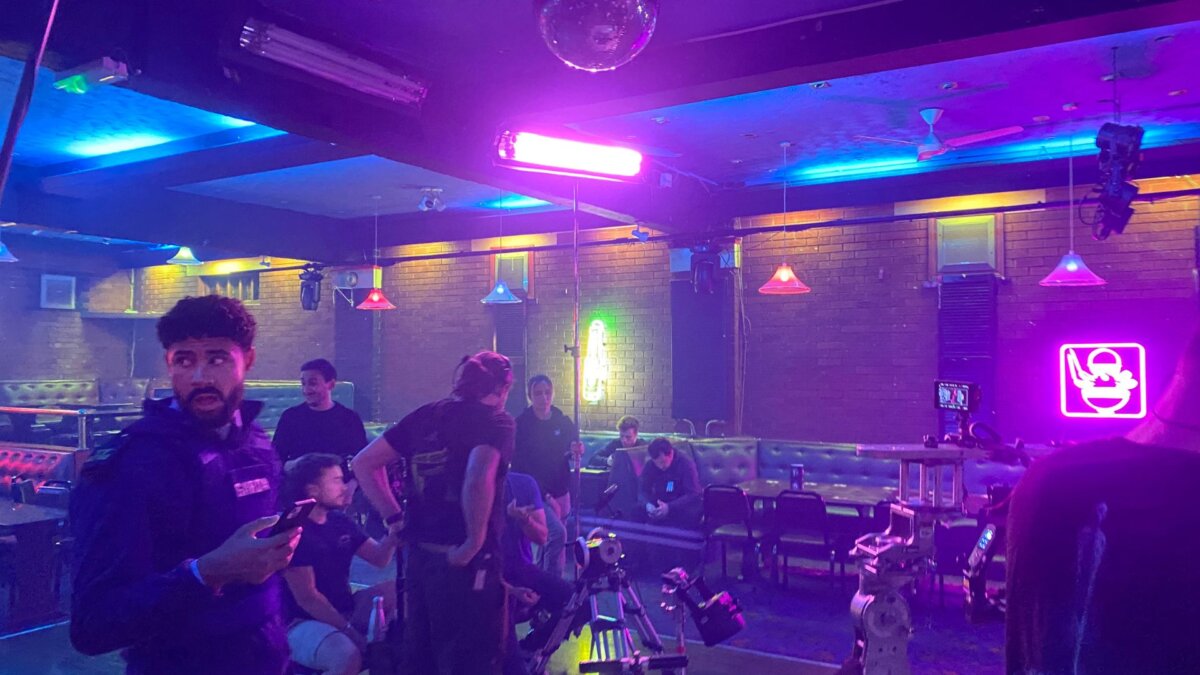
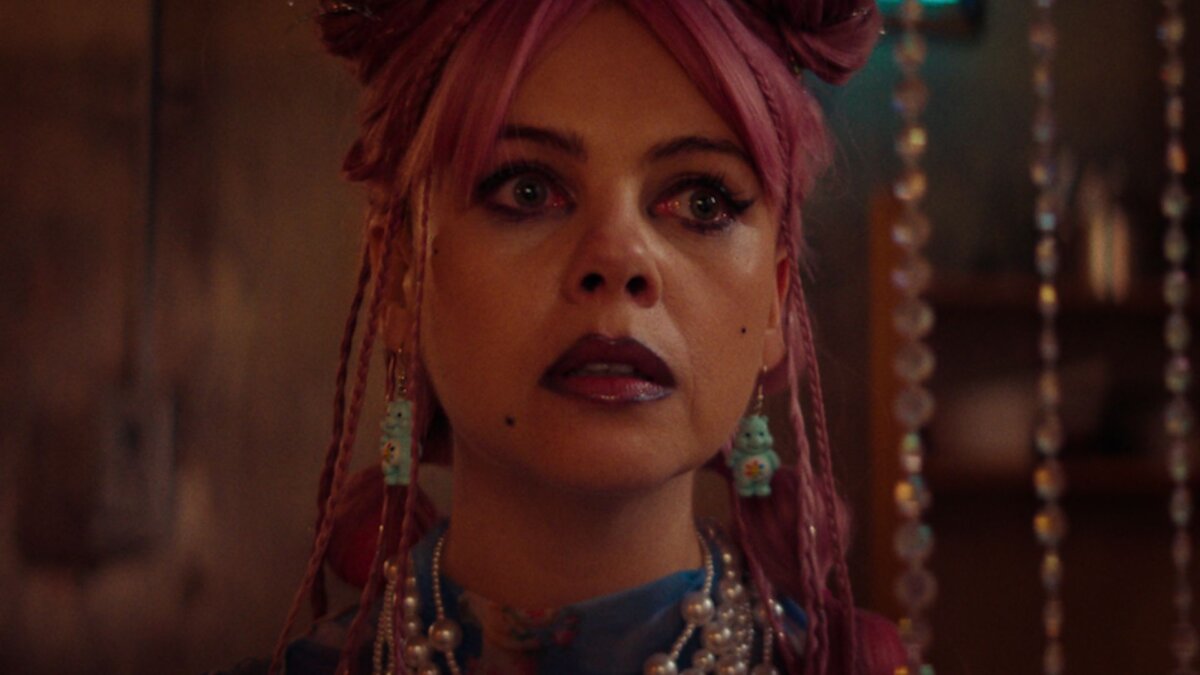
Cinematography 101 tells novice filmmakers to light with motivation. At its strictest, that means keep it real—justify every splash of light with a source: the lamp in the corner, the window behind the character, the streetlight outside. But How to Get to Heaven plays fast and loose with that directive. “This was one of the projects where lighting didn’t have to be motivated,” Barron says. “We leaned into the uncanny—forget where the light is coming from and why. It was all about creating a subliminal feeling.” This is established from episode one, when Saoirse first flies to Belfast and the airplane interior is weirdly vibrant—a candy-colored sunrise outside the window fit for a Barbie Dreamhouse. Astera Titan Tubes were hidden throughout the hull of the plane set, producing a cool purplish interior against the orange sky: an exaggerated color language with no realistic origin that politely screams something is wrong. The scene is also the first appearance of ghost Greta, and Barron wanted purple to belong to her. “Color was very important, particularly purple,” she says. “It’s a harbinger of death, so we incorporated it from the very beginning.”
When the police station is introduced in episode two after the trio interrupts the wrong funeral, it’s another pure expression of lighting for emotional motivation rather than literal. To light the hallway, Astera bulbs were installed in pendant fixtures hanging from the ceiling, then dialed to an off-yellow, nearly green hue. When gaffer Slater asked whether it made sense, Barron’s answer was immediate: “Yes—because it’s Knockdara Weird.” The hallway reads as eerie and slightly nauseating, mapping so neatly onto Saoirse, Robyn, and Dara’s fraying nerves that it never feels out of place. “It gave the space this strange, kind of eerie glow,” Barron says. “We wouldn’t have been able to do that with any other kind of fixture.”
The hyper-colorized and dynamic approach Barron established is the backbone of this madcap dark comedy. “For me, I was always trying to underline the tension with color,” Barron says. “And that’s what I love about Astera. You can clip them or hide them anywhere. Ever since I first used Astera Tubes, I don’t go to set without them.”
How to Get to Heaven from Belfast is streaming on Netflix now.