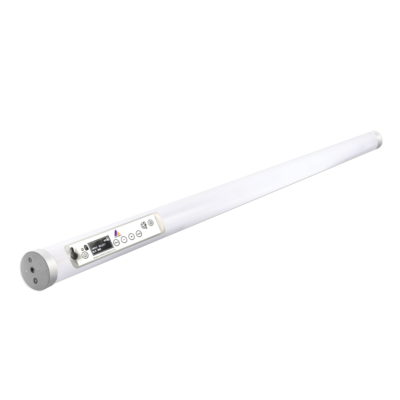
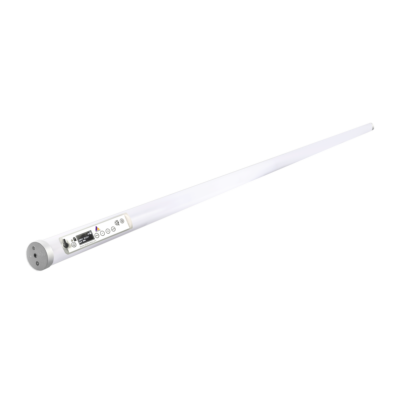
El aclamado director de fotografía Jeff Cronenweth, miembro de la ASC, ya nos tiene acostumbrados a crear imágenes inolvidables que ponen de relieve profundos dramas humanos, pero «Tron: Ares» supuso adentrarse en territorio desconocido. Dirigida por Joachim Rønning y protagonizada por Jared Leto, esta tercera entrega de la saga «Tron» de Disney fue la primera película de ciencia ficción de Cronenweth. Un proyecto que prometía efectos visuales espectaculares con una historia humana íntima como eje central, la película presentó una mezcla desafiante de estilos visuales distintivos a lo largo de tres mundos digitales diferentes, además de la «realidad». Cronenweth y el jefe de iluminación Stuart Haggerty recurrieron a Astera, utilizando cientos de Titan Tubes, Hyperion Tubes y LunaBulbs en configuraciones innovadoras que ampliaron los límites de la iluminación interactiva.
Cuando Jared Leto —colaborador de Cronenweth en El club de la lucha— se puso en contacto con él por primera vez para hablar de Tron: Ares, el director de fotografía se mostró reticente. «He rechazado muchas películas de ciencia ficción porque simplemente no conseguía identificarme con la historia», explica Cronenweth. Pero tras leer el guion y hablar sobre la visión de Leto, algo hizo clic. «Si conseguíamos llegar a la humanidad y a las relaciones que están en el corazón de la historia, pensé que lo tendríamos». De hecho, en el fondo, Ares es tanto una historia de amor como un viaje de autodescubrimiento. La interpretación de Leto como Ares —una inteligencia artificial que busca ser algo más que un habitante digital—, con una calidez cautivadora, da solidez a la película en medio de secuencias de acción trepidantes y escenas espectaculares.
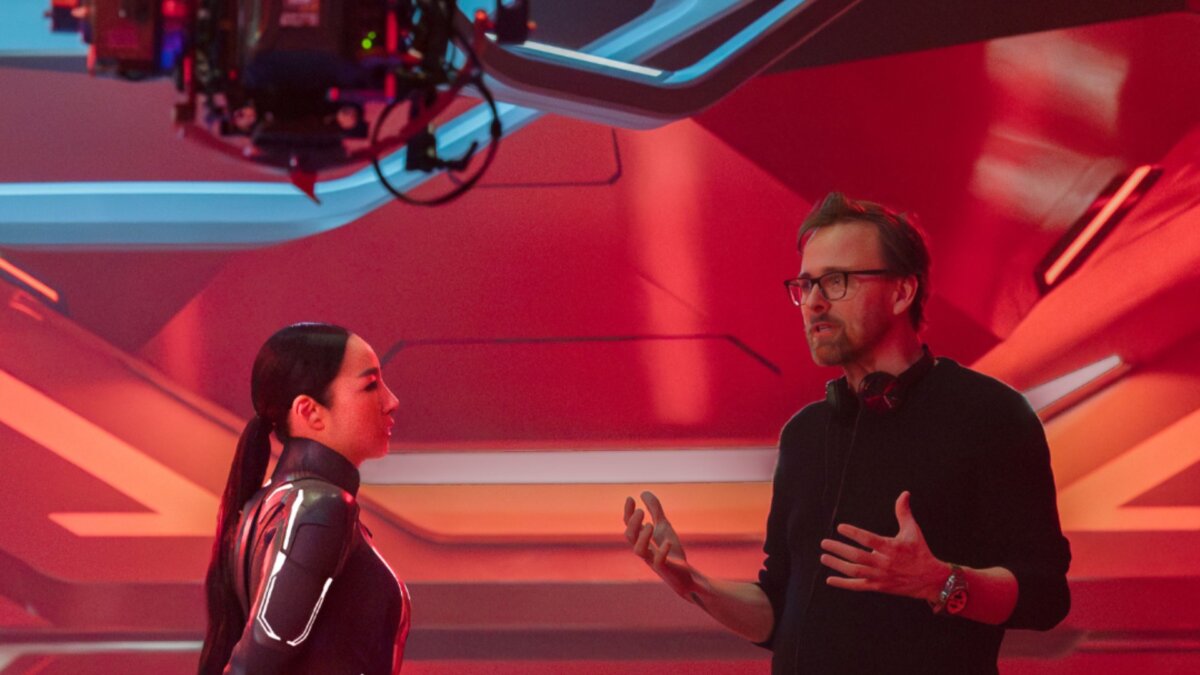
Photo by Leah Gallo. © 2025 Disney Enterprises, Inc. All Rights Reserved.
Incorporación de la energía a la red eléctrica
La envergadura de «Tron: Ares» era enorme. Con 14 semanas de preparación (que se alargaron a varios meses por las huelgas), montajes con cuatro cámaras en varias unidades y decorados gigantescos en los Mammoth Studios de Vancouver, la producción podría haber resultado abrumadora. «Por suerte, tuvimos mucho tiempo de preparación, y realmente valió la pena», dice Cronenweth. «La mayor parte de la película se hace en la preproducción: eliminas tantos problemas y obstáculos como puedes, para que, cuando llegue el día del rodaje, solo te quede intentar sacar las mejores interpretaciones y escenas posibles». Esa preparación exhaustiva les permitió a él y al equipo desarrollar soluciones de iluminación sofisticadas que hicieran que lo imposible pareciera natural.
En colaboración con el diseñador de producción Darren Gilford, el equipo cubrió todo un estudio del tamaño de un campo de fútbol con pantalla azul, instaló cientos de luces interactivas e incorporó fuentes de luz reales en casi todos los decorados. «Cada vez que aparece una bombilla en una escena, es una LunaBulb», explica el director de fotografía, refiriéndose al dispositivo con forma de bombilla de Astera, que incorpora la tecnología de color del motor LED Titan. «La mayoría de las luces integradas en los decorados de la “red” (la “frontera digital” hiperestilizada de la saga Tron) o en la oficina de Dillinger son Astera Tubes».
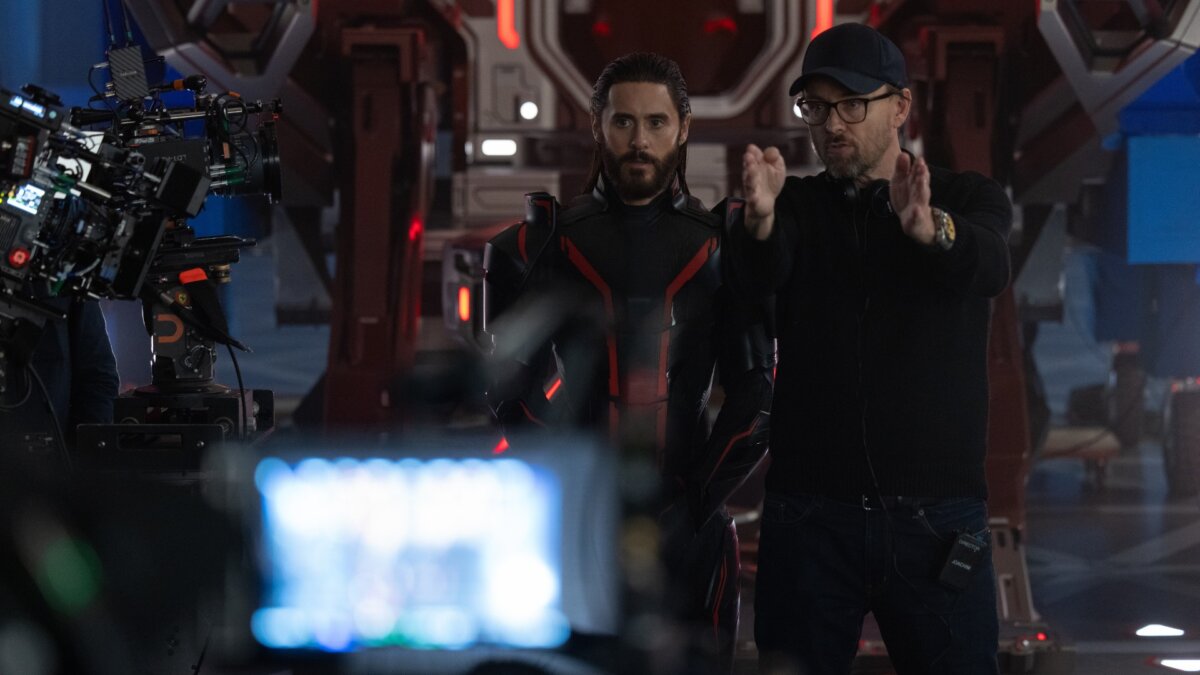
Photo by Leah Gallo. © 2025 Disney Enterprises, Inc. All Rights Reserved.
Ares supone la primera vez en la serie que hay programas fuera de la red, lo que plantea un reto único: cómo diferenciar entre tres mundos digitales distintos (la red de Dillinger, la de Incom y la red heredada de Jeff Bridges) y el mundo real.
A cada mundo de la red se le asignó su propia paleta de colores: Incom presentaba un azul suave, Dillinger era rojo saturado sobre fondo negro, y la red de Bridges incorporaba tonos aguamarina desaturados y pasteles con grano, como homenaje a la película original de Tron de 1982. «Dentro de la red, intenté no “iluminar”. En su lugar, incorporamos fuentes de luz en los decorados», explica Cronenweth. Cada decorado de la red prácticamente brilla, con luces geométricas que añaden toques de dimensionalidad a la arquitectura futurista. «Me gusta la idea de dejar que los actores encuentren esas fuentes de forma natural, aunque al final también acabamos añadiendo algunos acentos, un detalle clave o esto y lo otro».
Por el contrario, las localizaciones del mundo real adoptaron una estética más cruda. En la estación de transferencia de Dinkum, que hace las veces de puerta de entrada a la red con un aspecto de impresión 3D, se integraron unos Astera AX3 LightDrops compactos, alimentados por batería, que hacían las veces de luces estroboscópicas de alarma y alarmas de incendio en las paredes. Los AX3 también se colocaron estratégicamente en el aparcamiento donde Eve Kim (Greta Lee) empuja a Athena (Jodie Turner-Smith) desde una altura de varios pisos, en medio de una persecución en moto llena de adrenalina. «Ese aparcamiento tenía tres tipos diferentes de luces de colores. Normalmente las habrías cambiado todas, las habrías uniformizado y habrías pintado las paredes. Pero decidimos que no, que mejor aprovechar las fuentes de luz mezcladas y realzarlas: eso es parte de la magia del mundo real».
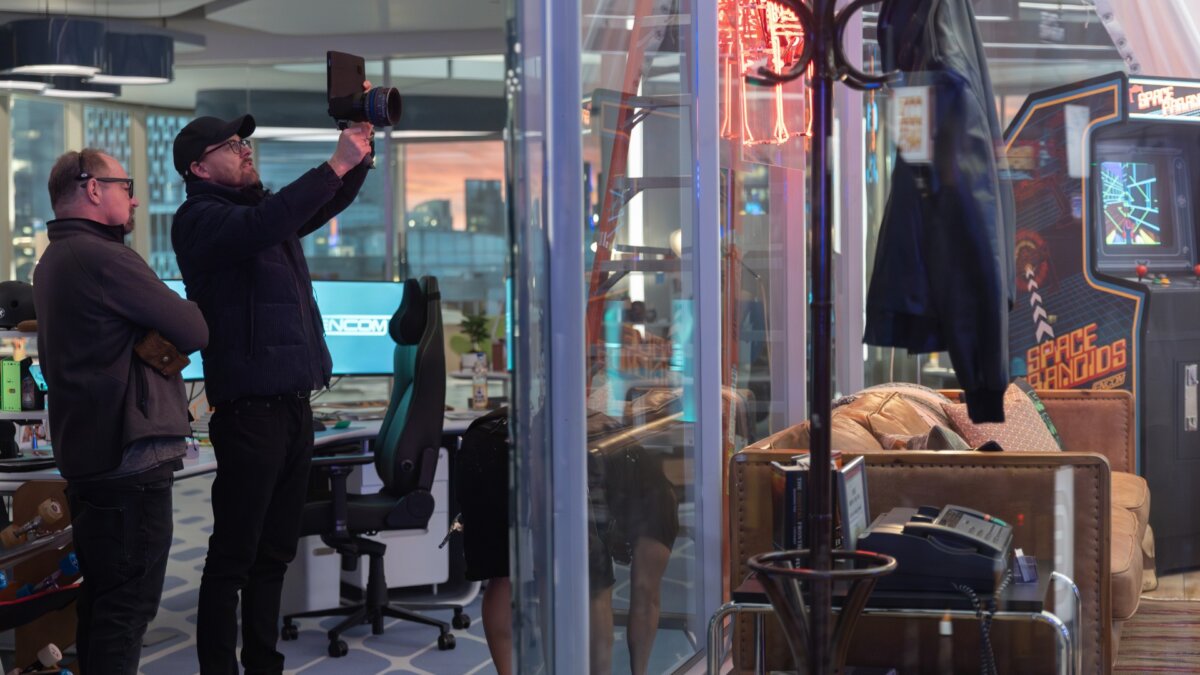
Photo by Leah Gallo. © 2025 Disney Enterprises, Inc. All Rights Reserved.
Entra en el Monstero
El sistema Astera más impresionante de la película se ganó el apodo cariñoso de «el Monstero»: un marco de 20 pies por 20 pies repleto de más de 200 tubos Titan e Hyperion —los LED con forma de bastón, de 16 píxeles, 40,7” (104 cm) y de 32 píxeles y 79,9” (203 cm), respectivamente, con forma de bastón. Diseñada por el jefe de iluminación Stuart Haggerty y construida por el técnico de montaje Dave Mackey, esta enorme fuente de luz se montó en un cabezal articulado acoplado a una carretilla elevadora con brazo extensible, lo que permitía colocar y mover el gigantesco equipo con precisión.
«Necesitaba una fuente bastante grande para poder proyectar imágenes animadas a través de ella», explica Cronenweth. El «Monstero» cumplió una función fundamental: crear luz interactiva para las escenas en las que los personajes interactúan con hologramas, como cuando los habitantes de la red se comunican con un programador humano. «Usé ese «Monstero» como luz para igualar y fusionar los efectos visuales. Fue increíblemente eficaz».
Lo que empezó como algo puntual para un único plató se convirtió en una herramienta esencial durante toda la producción. «Al final, lo fuimos arrastrando de un plató a otro», dice Cronenweth. «E incluso hicimos un mini-Monstero para poder usarlo en montajes más pequeños».
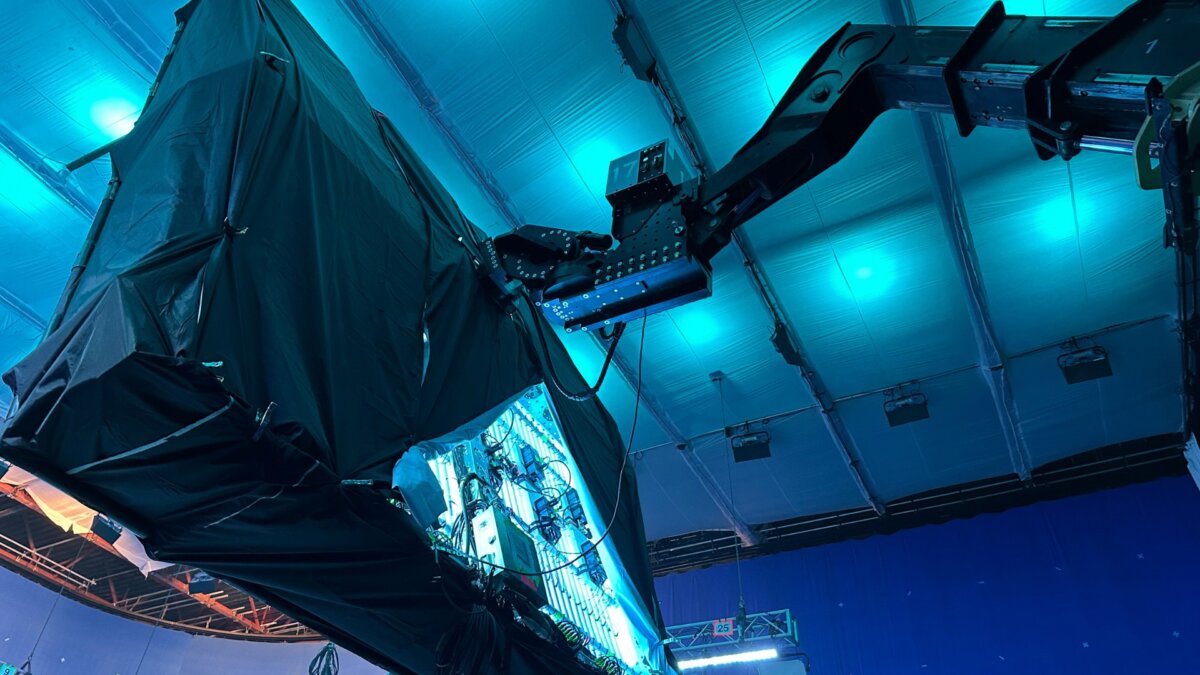
Photo by Leah Gallo. © 2025 Disney Enterprises, Inc. All Rights Reserved.
Inmersión total
La versión de Ares de un concepto visual clásico de Tron muestra a los personajes dentro del propio flujo de datos. Literalmente rodeados por un torrente de unos, ceros y páginas de información digital, y vestidos con trajes parcialmente reflectantes, una cascada de luz resplandeciente ayuda a potenciar el efecto. Para estas secuencias, Cronenweth creó una innovadora «luz de anillo» utilizando tubos Astera, pero no en el sentido tradicional de la luz de belleza.
«Animé ese anillo de luz con patrones de datos que nunca se interrumpían, pero que siempre se oponían entre sí. Eso le daba una sensación de movimiento de la luz diferente a todo lo demás», explica. Cada píxel de un tubo Titan se podía programar y controlar individualmente para conseguir ese efecto. La estructura circular de ocho pies generaba una luz que parecía viva y computacional, sumergiendo a los personajes de forma visceral en el flujo de información.
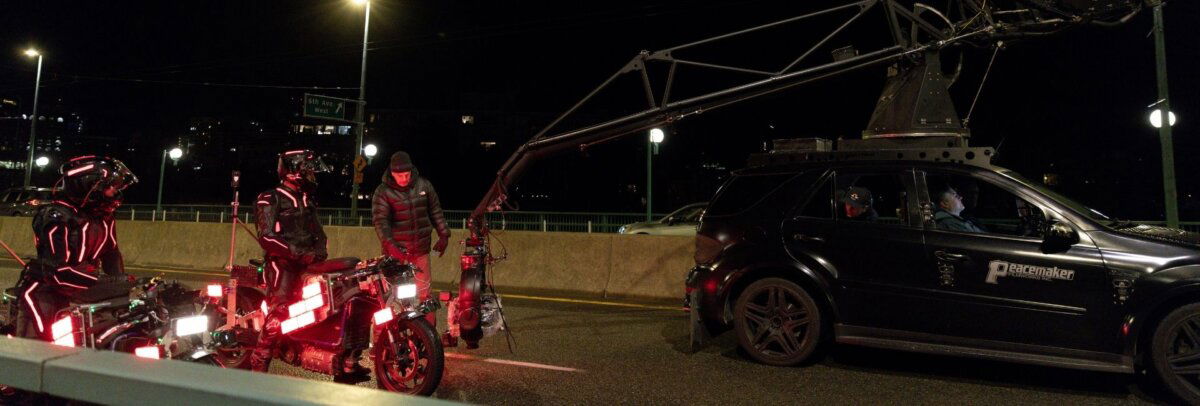
Por supuesto, ninguna producción de Tron estaría completa sin las icónicas motos de luz, que dejan estelas de partículas luminosas a su paso. Para que este efecto resultara creíble, el equipo complementó los LED integrados directamente en cada moto con HydraPanels, montados en los laterales. Cuando los especialistas salieron a la calle, los paneles compactos (6,5″ x 3,3″ x 1,7″ / 16,5 cm x 8,4 cm x 4,3 cm) aportaron el componente práctico de esas características estelas de luz. «Los HydraPanels nos dieron ese aspecto vanguardista y, al mismo tiempo, eran lo suficientemente resistentes para el trabajo de acrobacias», señala Cronenweth.
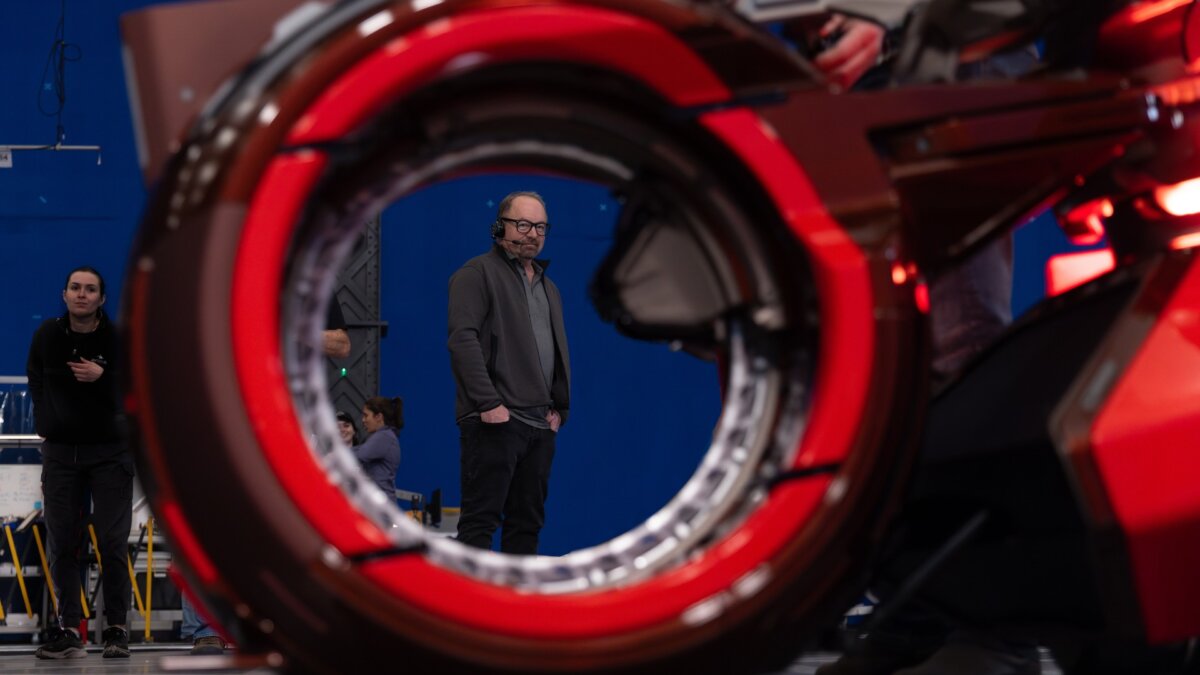
Photo by Leah Gallo. © 2025 Disney Enterprises, Inc. All Rights Reserved.
Iluminación invisible
Uno de los puntos fuertes más destacados de las luces Astera es su capacidad para variar la intensidad de forma limpia y sin cambios de color, todo ello controlado a distancia. «Usamos mucho la interacción con la mesa de atenuación, no solo para las luces interactivas, sino también durante los movimientos complejos de la cámara o la disposición de los actores», explica Cronenweth. En un truco de iluminación prácticamente invisible, mientras Leto recorre a zancadas un largo pasillo en la cuadrícula de Dillinger, la iluminación se ajusta a su movimiento. «Hacer que la iluminación se desplace de un extremo del plató al otro y termine en un primer plano es todo un reto: requiere fundidos y que se enciendan luces que antes no estaban encendidas. «De verdad que usamos todas las herramientas que teníamos a nuestro alcance para lograrlo y conseguir transiciones de luz fluidas durante las tomas que no resultaran obvias para el público».
Los complejos movimientos de cámara de la película exigían una iluminación igual de sofisticada. «En las rejillas utilizamos Sisu por sus sistemas de control de movimiento, no para hacer tomas repetibles, sino para poder tener movimientos mecánicos, muy directos y predefinidos que fueran de una perfección sobrehumana, como contrapunto a la vida real». Las luces suben y bajan de intensidad durante las tomas a medida que la cámara se desplaza por el espacio, manteniendo la exposición y la atmósfera adecuadas sin que el público se dé cuenta de los ajustes. «Es casi como un ingeniero de un concierto de música, o el director de una orquesta, ajustando todos los tonos musicales», dice Cronenweth.
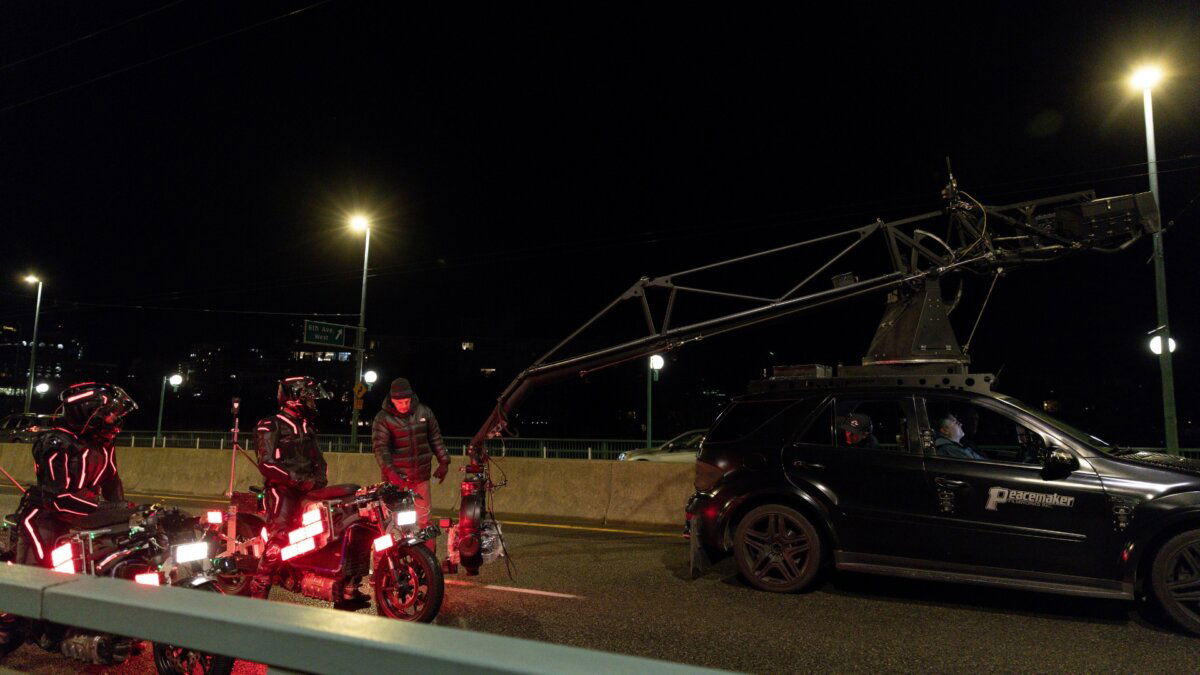
Photo by Leah Gallo. © 2025 Disney Enterprises, Inc. All Rights Reserved.
El legado continúa
«Para mí ha supuesto un cambio radical», dice sin más. «A lo largo de la evolución de Astera, se han vuelto cada vez más inteligentes y fáciles de usar». Esa facilidad de uso resultó esencial en una producción de la envergadura de «Tron: Ares». «Es una locura lo que te puedes permitir», dice. «Colocas uno detrás de algo que está un poco demasiado en sombra, te acercas, lo bajas y ya está: no tienes que preocuparte más, funciona bien durante horas. Los pongo por todas partes. Los llevo siempre conmigo y están ahí para coger uno cuando siento que falta algo en algún sitio». La película es más cruda que sus dos predecesoras, tanto visual como sonoramente (con una banda sonora original de Trent Reznor y Atticus Ross, de Nine Inch Nails). El enfoque de Cronenweth utiliza la iluminación y el movimiento de cámara para que las rejillas parezcan pulidas y mecánicamente perfectas, mientras que el mundo real sigue siendo desordenado y con textura.
«Ares» es más que un logro técnico para Cronenweth. En esta última hazaña, el director de fotografía y su equipo han creado una experiencia visual que resulta a la vez vanguardista y emotiva: un merecido homenaje al legado de «Tron» y un paso prometedor para la franquicia.
«Tron: Ares» ya está disponible en Disney+.