
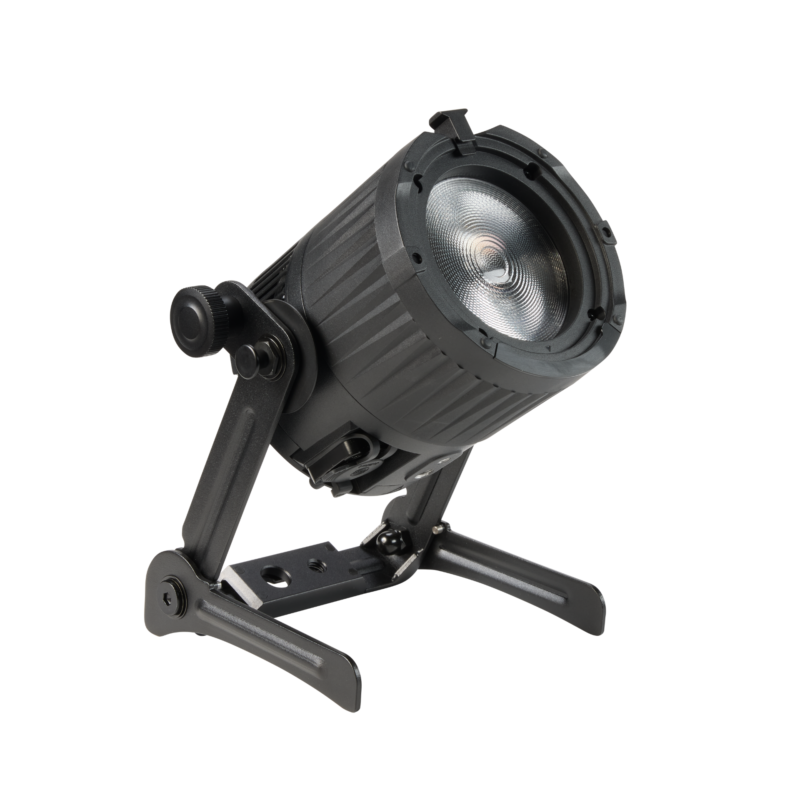
Technical Specifications

QuikBeam (with battery)

QuikBeam (without battery)

Order Codes

AST-QUKBM-STD

AST-QUKBM

LED Engine

Titan LED Engine

Titan LED Engine

Colors

RGBMintAmber

RGBMintAmber

LED Power Draw

20 W

20 W

Luminous Flux 2 700 K

1 124 Lumens

1 124 Lumens

Luminous Flux 3 200 K

1 190 Lumens

1 190 Lumens

Luminous Flux 4 000 K

1 239 Lumens

1 239 Lumens

Luminous Flux 5 500 K

1 285 Lumens

1 285 Lumens

Luminous Flux 6 500 K

1 224 Lumens

1 224 Lumens

Candela 2 700 K

18 545 cd

18 545 cd

Candela 3 200 K

19 575 cd

19 575 cd

Candela 4 000 K

20 312 cd

20 312 cd

Candela 5 500 K

20 663 cd

20 663 cd

Candela 6 500 K

20 564 cd

20 564 cd

Light Output 2 700 K @ 3 m

2 059 Lux

2 059 Lux

Light Output 3 200 K @ 3 m

2 174 Lux

2 174 Lux

Light Output 4 000 K @ 3 m

2 257 Lux

2 257 Lux

Light Output 5 500 K @ 3 m

2 294 Lux

2 294 Lux

Light Output 6 500 K @ 3 m

2 285 Lux

2 285 Lux

CRI (Ra) / TLCI 3200 – 6500 K
(OutputGain disabled)

≥96

≥96

OutputGain

Yes

Yes

Beam Angle

12.6° – 58.5°

12.6° – 58.5°

Field Angle

16.9° – 78.2°

16.9° – 78.2°

Strobe

0 – 25 Hertz

0 – 25 Hertz

Battery Runtime

up to 20 hours

N/A

Battery Runtime (max. Brightness)

1 h 20 m

N/A

Charging Time (nominal)

2 h 40 m

N/A

DC Input

PoE++

PoE++

DC Connector

RJ45

RJ45

Ethernet Port Speed

100 Mbit/s

100 Mbit/s

Power Consumption (max.)

40 W

40 W

Cable length

up to 100 m

up to 100 m

ArtNet/sACN

via Ethernet

via Ethernet

CRMX Receiver

Built-in

Built-in

BluetoothBridge BTB

Built-in

Built-in

Wireless Protocols

CRMX, UHF, Bluetooth, WiFi

CRMX, UHF, Bluetooth, WiFi

Wireless Range

CRMX / UHF up to 300 m / 330 yds
Bluetooth up to 3 m / 3.3 yds

CRMX / UHF up to 300 m / 330 yds
Bluetooth up to 3 m / 3.3 yds

RDM Support

via CRMX

via CRMX

Infrared Control

Yes

Yes

IP Rating unwired

IP65

IP65

IP Rating wired

IP65

IP65

Ambient Operating Temperature

0 – 40 °C / 32 – 104 °F

0 – 40 °C / 32 – 104 °F

Weight

1617 g / 3.56 lbs

1438 g / 3.17 lbs

Dimensions (H x Ø) without yoke

136 mm x Ø 120 mm /
5.35" x Ø 4.75"

136 mm x Ø 120 mm /
5.35" x Ø 4.75"

Dimensions (L x W x D) with yoke

241 mm x 174 mm x 125 mm /
9.48" x 6.84" x 4.93"

241 mm x 174 mm x 125 mm /
9.48" x 6.84" x 4.93"

Mounting Options

1/4" – 20 UNC, 3/8" – 16 UNC thread, Yoke (with AirlineTrack, 3/8" – 16 UNC thread, 1/2" hole)

1/4" – 20 UNC, 3/8" – 16 UNC thread, Yoke (with AirlineTrack, 3/8" – 16 UNC thread, 1/2" hole)

All specifications provided are typical values and may be subject to change without prior notice.

RF Characteristics

Wireless Modules

Modulation

ERP (Transmitter)

Channel Count

EU: UHF***(863-870 MHz)

FHSS

< 25 mW

47

USA: UHF (917-922.20 MHz)

FHSS

< 25 mW

53

AUS: UHF (922.30-927.50 MHz)

FHSS

< 25 mW

53

SGP: UHF (920.50-924.50 MHz)

FHSS

< 25 mW

41

KOR: UHF (917.9-921.5 MHz)

FHSS

< 25 mW

10

RUS: UHF (868.75-869.12 MHz)

FHSS

< 25 mW

6

JPN: UHF (922.80-926.40 MHz)

FHSS

< 25 mW

19

CRMX (2402-2480 MHz)

FHSS

< 100 mW

79

Bluetooth 5.0 LE (2402-2480 MHz)

FHSS

10 mW (BLE)

40

WiFi (2412-2472 MHz)

DSSS, OFDM

< 100 mW

13

***General allocation of frequencies for use by short-range radio applications

Spectrum usage regulations:

Frequency range in MHz1)

Maximum equivalent radiant power (ERP)

Additional parameters / frequency access and interference mitigation techniques

865 – 868

25 mW

Requirements for frequency access and mitigation techniques3)
Alternatively, a maximum duty cycle2) of 1% can be used.

868.0 – 868.6

25 mW

Requirements for frequency access and mitigation techniques3)
Alternatively, a maximum duty cycle2) of 1% can be used.

868.7 – 869.2

25 mW

Requirements for frequency access and mitigation techniques3)
Alternatively, a maximum duty cycle2) of 0.1% can be used.

869.40 – 869.65

500 mW

Requirements for frequency access and mitigation techniques3)
Alternatively, a maximum duty cycle2) of 10% can be used.

869.7 – 870.0

25 mW

Requirements for frequency access and mitigation techniques3)
Alternatively, a maximum duty cycle2) of 1% can be used.

1) The use of adjacent frequency bands within this table as a single frequency band is permitted, provided that the specific conditions for each of these adjacent frequency bands are met.

2) „duty cycle“ means the ratio of Σ(Ton)/(Tobs) expressed as a percentage, where ‚Ton‘ is the ‚on-time‘ of a single transmitting device and ‚Tobs‘ is the observation period Ton is measured in an observation frequency band (Fobs). Unless otherwise specified in this general allocation, Tobs is a continuous period of one hour and Fobs is the applicable frequency band in this general allocation (table).

3) Frequency access and interference mitigation techniques shall be used whose performance level at least meets the essential requirements of Directive 2014/53/EU or the Radio Equipment Act (FuAG). Where relevant techniques are described in harmonised standards, the references of which have been published in the Official Journal of the European Union pursuant to Directive 2014/53/EU, or parts thereof, performance shall be ensured which is at least equivalent to those techniques.